
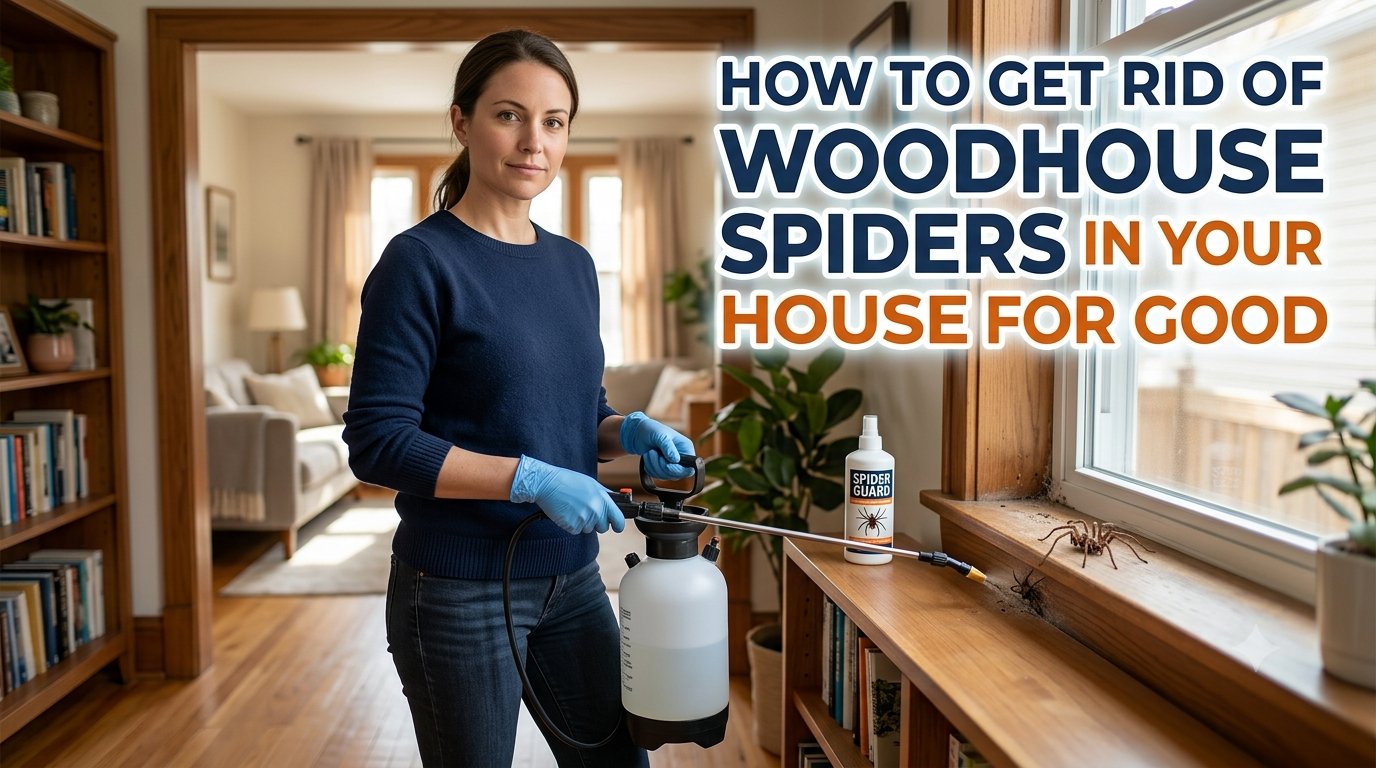
You moved a box in the basement and something reddish-brown with oversized fangs darted across the floor. If it looked almost alien – dark red body, pale belly, fangs that seem way too big for the size of it – that’s almost certainly a woodlouse spider (Dysdera crocata). And your first instinct to look up how to get rid of woodlouse spiders is the right call.
The good news: these spiders are not dangerous. The concerning-looking fangs are designed to pierce the armored shell of woodlice, not harm humans. But finding them inside your home regularly means something is attracting them, and that’s what you actually need to fix.
This guide covers identification, why they’re in your house, how to remove them, and what to change so they stop coming back.

Identifying a Woodlouse Spider: Are You Sure That’s What It Is?
Before treating any pest, you want to be certain you’ve identified it correctly. Woodlouse spiders get misidentified fairly often, most commonly as brown recluse spiders – and the two require completely different responses.
What a Woodlouse Spider Looks Like
Dysdera crocata has a very distinctive two-tone appearance that makes it one of the easier house spiders to identify once you know what to look for.
- Body color: Dark reddish-orange to rust-brown cephalothorax (front section), with a grayish-white or pale tan abdomen. That two-tone contrast is unusual among house spiders and a key identifier.
- Size: Females reach about half an inch in body length. Males are smaller, around a quarter inch. Their leg span makes them look larger.
- Eyes: Six eyes arranged in an oval cluster – not the eight eyes most spiders have. This is another distinguishing feature.
- Fangs: Disproportionately large, forward-facing chelicerae that are clearly visible. They look oversized for the spider’s body because they’re built specifically to crack open woodlice shells.
- Legs: Reddish-orange, matching the body.
Woodlouse Spider vs. Brown Recluse: Key Differences
This is worth getting right because the two spiders are sometimes confused in the US, and a misidentification can cause unnecessary panic.
| Feature | Woodlouse Spider | Brown Recluse |
| Color | Two-tone: rust body, pale belly | Uniform light to medium brown |
| Markings | No distinctive markings | Violin shape on back |
| Eyes | 6, in oval cluster | 6, in three pairs |
| Fangs | Very large and visible | Not prominent |
| Webs | None – active hunter | Irregular web in dry, dark areas |
| Typical US range | Northeast, Midwest, Pacific NW | South-central states |
If you’re in the northeastern or midwestern United States and the spider is two-toned with prominent fangs and no web, it’s almost certainly a woodlouse spider, not a brown recluse.
Where You’ll Find Them Indoors
Woodlouse spiders follow their food source. They end up inside homes when woodlice (pill bugs, roly-polies, sow bugs) have already moved in. Their preferred indoor locations are:
- Basements and crawl spaces, especially near foundation walls
- Under sinks and around drains with any moisture
- Behind water heaters and washing machines
- Ground-floor corners and along exterior walls
- Garages, especially where clutter provides cover
They’re nocturnal and don’t build webs, so you’re most likely to spot one on the move at night or when you disturb a hiding spot during the day.
How to Get Rid of Woodlouse Spiders: Step-by-Step
Getting woodlouse spiders out of your house involves three tracks working together: removing the ones already inside, eliminating their food source, and sealing entry points.
Step 1 – Remove Spiders Already Inside
For individual spiders you find indoors, direct removal is quick and effective. Use a glass and piece of card to trap and release them outside, or vacuum them up directly. If you use a vacuum, empty the canister outside immediately.
Sticky glue traps placed along baseboards and in corners where you’ve seen activity will catch both the spiders and any woodlice moving through. These are non-toxic and give you a good read on how much activity is happening.
Step 2 – Eliminate the Woodlice Population
This is the most important step for long-term results. Without food, woodlouse spiders won’t stay.
Inside the home:
- Fix any leaking pipes, dripping faucets, or condensation issues contributing to damp areas
- Run a dehumidifier in the basement if humidity is regularly above 50%
- Vacuum up any visible woodlice along baseboards and in corners
- Remove cardboard boxes, stacked paper, and organic clutter from basement floors – these provide cover and moisture retention
Outside the home:
- Move mulch, wood chips, and leaf litter at least 12 inches away from the foundation wall
- Stack firewood away from the house, off the ground if possible
- Clear gutters so water drains away from the foundation rather than pooling
- Grade soil away from the foundation so rainwater flows outward, not toward the house
Step 3 – Seal Entry Points
Woodlouse spiders enter through the same gaps as other pests. A targeted seal job makes a real difference.
- Install or replace door sweeps on exterior doors, especially basement and garage entries
- Seal cracks in the foundation with exterior-grade caulk or foam sealant
- Check and repair any damaged window screens at basement level
- Seal gaps around utility pipes and conduits where they enter the foundation
Practical tip: Weather stripping on ground-floor exterior doors wears out faster than people realize. Press a piece of paper against the bottom of a closed door – if it slides out easily, air (and small pests) are getting through. Replacing worn weather stripping takes 20 minutes and makes a measurable difference.
Step 4 – Apply a Perimeter Insecticide If Needed
If you’re seeing woodlouse spiders regularly indoors and the environmental fixes are in progress but haven’t fully taken effect yet, an EPA-registered residual insecticide applied around the exterior perimeter and along indoor baseboards can reduce activity significantly.
Look for products containing one of these active ingredients, which are effective for spiders and the crawling insects they prey on:
- Bifenthrin (such as Bifen IT or Bifen LP granules) – a pyrethroid with strong residual activity on hard surfaces and soil. Apply along the foundation perimeter, in basement corners, and along door frames. Effective for several weeks per application.
- Deltamethrin (such as Delta Dust in powder form) – particularly useful in cracks, wall voids, and spaces where liquid spray doesn’t reach. Delta Dust is labeled for indoor crack and crevice application and remains effective even in humid conditions.
- Cyfluthrin – another pyrethroid option found in consumer spray products, effective for baseline spider and woodlice control on perimeter surfaces.
Apply the perimeter spray in a band about 3 feet up the exterior wall and 3 feet out along the foundation. Inside, treat along baseboards, in basement corners, and around any pipe penetrations. Don’t broadcast spray across open floor areas – targeted application is more effective and reduces unnecessary chemical exposure.
Reapply every 4 to 6 weeks if you’re still seeing activity, or after heavy rain washes exterior treatments.
Preventing Woodlouse Spiders from Coming Back
One-time treatment without addressing the root cause means they’ll be back. The prevention steps that actually work long-term:
Keep moisture low. A basement or crawl space running consistently above 50% relative humidity is essentially an open invitation for woodlice and the spiders that follow them. A dehumidifier running in spring and summer is one of the highest-impact changes you can make.
Maintain the gap around your foundation. Mulch, leaf piles, and dense ground cover against the exterior wall create the exact damp, organic conditions woodlice need. Keep a clear, dry gap of at least one foot around the foundation perimeter.
Do a seasonal entry point check. Fall is the peak entry season – as temperatures drop, spiders seek shelter indoors. Fall is particularly important because spiders seek shelter as temperatures drop, making September and October prime times for spider invasions. Check and refresh door sweeps, weather stripping, and foundation caulk before cold weather arrives.
Reduce indoor clutter at ground level. Cardboard boxes, stacked materials, and piles of anything on basement floors create harborage areas for woodlice and shelter for the spiders hunting them. Keep basement storage organized and off the floor where possible.
Is the Woodlouse Spider Dangerous? The Facts
This question comes up constantly, largely because the spider’s appearance – oversized fangs, aggressive posture when cornered – suggests something dangerous. The research says otherwise.
A 2006 study in the journal Toxicon (Vetter and Isbister) examined 16 verified Dysdera crocata bites and found that the main symptom was minor pain typically lasting less than one hour, most of which was attributed to the mechanical puncture of the skin rather than venom effects. No severe reactions, no necrosis, no systemic symptoms were recorded across all verified cases.
The woodlouse spider (Dysdera crocata) is not dangerous to humans. It does have venom and fangs large enough to pierce skin, but its bite is virtually innocuous. The main symptom is minor pain that typically lasts less than an hour, and every documented case has resulted in complete recovery with no lasting damage.
If bitten, wash the area with soap and water, apply a cool compress, and take an over-the-counter antihistamine if it’s itchy. That’s genuinely all that’s needed in almost every case. The spider bites defensively when grabbed or cornered – don’t handle them and they won’t bite.
The viral social media claims about woodlouse spiders being newly discovered dangerous spiders in the US are false. A 2006 study of 16 verified bites showed that the main symptom was the pain of the puncture and that the venom had little effect. This spider has been present in North America for decades.
Dry It Out, Seal It Up, Done
The woodlouse spider is in your house because woodlice are in or around your house, and woodlice are there because there’s moisture and organic material feeding them. Fix the moisture problem, eliminate the food source, seal the entry points, and apply a bifenthrin or deltamethrin perimeter treatment if you need to accelerate results.
This is a solvable problem that doesn’t require professional intervention in most cases. Start with the dehumidifier and the foundation perimeter – those two changes alone make a bigger difference than most people expect.